
Crochet's 2024 Renaissance: Why Now is the Perfect Time to Learn
There's something happening in the world of yarn. Crochet is back, and it’s bigger than ever. You might be seeing it all over TikTok, Instagram, or even just noticing more friends picking up hooks – and for good reason. The research is showing a real surge in interest, with what some are calling "2024’s Trend Crochet pattern" taking off. It's a fantastic time to join the community.
I think a lot of it comes down to a need for mindful activity. Life is fast-paced, and crochet offers a chance to slow down, focus, and create something tangible. It's incredibly therapeutic, a way to de-stress and disconnect from screens. Plus, there's a real appreciation for handmade items these days; people want things with a story, something unique and crafted with care.
Don't let the intricate designs you see online intimidate you. It looks complicated, but the basic stitches are surprisingly easy to learn. And the possibilities are truly endless. You can start with something small, like a coaster, and work your way up to blankets, garments, or even intricate amigurumi. The craft really scales to your ambition and time.
The best part? You don’t need a huge investment to get started. A hook, some yarn, and a little patience are all you really need. Crochet is accessible, affordable, and incredibly rewarding. It's a skill you can carry with you, a creative outlet that will bring joy for years to come. It's not just a hobby, it's a community.
The Foundation: Essential Tools & Getting Started
Okay, let's talk tools. You don't need to run out and buy everything at once, but having a few essentials will make your first projects much smoother. First, you’ll need a crochet hook. Sizes range from very small (steel hooks for thread) to quite large (for chunky yarn). For beginners, I recommend a size H/8 (5.0 mm) or I/9 (5.5 mm) hook. These are versatile and work well with worsted weight yarn.
Yarn is, of course, crucial. Worsted weight yarn is a great starting point – it's easy to work with and widely available. Acrylic yarn is a budget-friendly option, while cotton is good for dishcloths and washcloths. Wool is lovely for warmer projects, but can be a bit more expensive. You’ll also need a pair of scissors, a few stitch markers (these help you keep track of your rows), and a yarn needle for weaving in ends.
There are different ways to hold the hook and yarn, and honestly, it's largely about what feels comfortable for you. Some people hold the hook like a pencil, others like a knife. Experiment and find what works best. Don't worry about doing it 'wrong'. For a more detailed guide on choosing the right yarn for different projects, check out our comprehensive yarn guide [link to yarn guide].
Tension and gauge are concepts you'll encounter later. Gauge refers to the number of stitches and rows per inch, and it's important for ensuring your finished project is the right size. Don't worry about it too much at first, but be aware that consistent tension is key to creating even stitches.
- Crochet Hooks: Sizes H/8 (5.0 mm) or I/9 (5.5 mm) are good starting points
- Yarn: Worsted weight, acrylic or cotton
- Scissors: For cutting yarn
- Stitch Markers: To mark important stitches
- Yarn Needle: For weaving in yarn ends
Top 5 Crochet Kits for Beginners to Master Trending Stitches in 2024
Includes 16 different hook sizes from 2.0mm to 17mm · Ergonomic soft rubber handles for comfortable grip · Comes with a durable zippered storage case
This comprehensive set offers a wide range of hook sizes and comfortable handles, perfect for practicing various stitch techniques.
Includes yarn, crochet hook, and stitch markers · Designed for absolute beginners · Features easy-to-follow instructions and project ideas
This kit is specifically designed for beginners, providing all the necessary components to start crocheting immediately.
Contains essential crochet tools like hooks, yarn needle, and scissors · Includes a beginner-friendly project guide · Affordable and accessible for new crocheters
The Amazon Basics kit is a budget-friendly option that equips beginners with the fundamental tools to begin their crochet journey.
Set of 10 ergonomic crochet hooks · Sizes range from 2.5mm to 6.0mm · Soft silicone handles reduce hand fatigue
With comfortable ergonomic handles, this set is ideal for extended practice sessions as beginners learn new stitches.
Set of 9 anodized aluminum crochet hooks · Includes sizes from 2.0mm to 6.0mm · Smooth finish prevents yarn snagging
These smooth, durable hooks are excellent for practicing stitches cleanly and efficiently, offering a pleasant tactile experience.
As an Amazon Associate I earn from qualifying purchases. Prices may vary.
Mastering the Magic: 5 Stitches Every Beginner Needs to Know
Let's get to the stitches! These five are the building blocks of most crochet projects. First up is the Magic Ring (or Magic Circle). This is how you start crocheting in the round, like for amigurumi or hats. It’s a clever technique that creates a tight center with no hole. You can find a fantastic tutorial here: [YouTube Tutorial Link – Magic Ring].
Next, the Chain Stitch (ch). This is the most basic stitch and forms the foundation chain for many projects. It's also used to create spaces between stitches. It may seem simple, but mastering a consistent chain is essential. Check this tutorial out: [YouTube Tutorial Link – Chain Stitch].
Then comes the Single Crochet (sc). This is a short, tight stitch that's great for creating dense fabrics. It’s used in everything from dishcloths to blankets. Here's a clear, step-by-step guide: [YouTube Tutorial Link – Single Crochet].
The Half Double Crochet (hdc) is a bit taller than single crochet and creates a slightly looser fabric. It's a good stitch to learn after single crochet. See it in action here: [YouTube Tutorial Link – Half Double Crochet]. Finally, the Double Crochet (dc) is the tallest of these five basic stitches. It creates an open, airy fabric and works up quickly. Watch this tutorial: [YouTube Tutorial Link – Double Crochet].
Remember, practice makes perfect. Don't get discouraged if your stitches aren't perfect at first. The abbreviations are important to know too – ch, sc, hdc, dc. You’ll see them in almost every pattern. Consistent practice with these five stitches will give you a solid foundation for more complex techniques.
Master 8 Beginner Crochet Stitches in 2024! (Magic Ring, Moss, Granny Stripe & More!)
You Get Hooked
Watch on YouTube →Beyond the Basics: 5 More Stitches to Expand Your Skills
Once you're comfortable with the basic stitches, it’s time to expand your repertoire. The Blanket Stitch (also known as the Crab Stitch) creates a lovely textured edge and is perfect for finishing blankets or scarves. It's crocheted backwards! Learn it here: [YouTube Tutorial Link – Blanket Stitch].
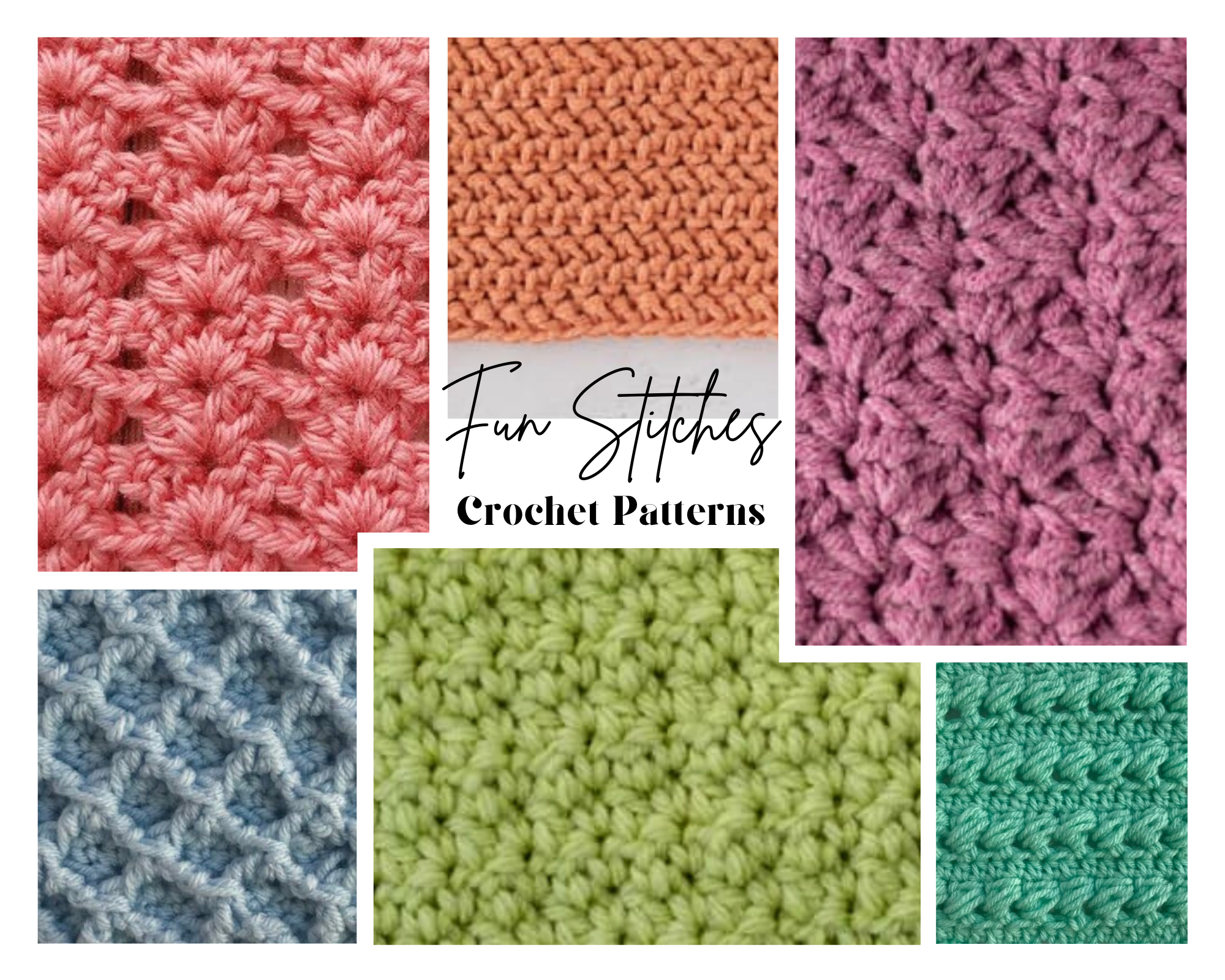
The Moss Stitch (also known as Granite Stitch) is a beautiful textured stitch that’s easy to learn. It creates a dense, almost woven fabric. It's perfect for blankets, scarves, and washcloths. Here's a tutorial: [YouTube Tutorial Link – Moss Stitch].
The Granny Stripe Stitch is a classic crochet stitch that's perfect for blankets and throws. It's a variation of double crochet and creates a bold, striped pattern. It’s a little faster than a traditional granny square. Check it out: [YouTube Tutorial Link – Granny Stripe Stitch].
The Mini Bean Stitch creates a wonderful textured surface that looks a lot more complex than it is. It's great for adding visual interest to blankets, hats, and scarves. Find a tutorial here: [YouTube Tutorial Link – Mini Bean Stitch]. Lastly, the Puff Stitch adds a three-dimensional element to your projects. It's great for flowers, embellishments, and textured blankets. Watch this tutorial: [YouTube Tutorial Link – Puff Stitch].
These stitches build on the foundation you’ve already established. The Blanket Stitch is great for finishing, the Moss Stitch adds texture, the Granny Stripe creates a classic look, the Mini Bean Stitch offers a unique feel, and the Puff Stitch adds dimension. Don’t be afraid to experiment and see what you can create!
The Chainless Foundation: A Modern Technique for Neater Work
Chainless foundation techniques are gaining popularity, and for good reason. Traditionally, you start a row with a chain, then work into that chain. A chainless foundation, however, builds the foundation row as you crochet. This results in a neater edge and more even tension.
There are chainless foundation versions of many stitches, but the Chainless Foundation Single Crochet (CFSC) and Chainless Foundation Double Crochet (CFDC) are the most common. They take a little getting used to, but the results are worth it. This tutorial demonstrates the benefits clearly: [YouTube Tutorial Link – Chainless Foundation].
I’m not sure if this is a must-learn for every beginner, but it's a valuable skill to have in your toolkit. It's particularly useful for projects where a neat edge is important, like blankets or garments. It’s a bit more advanced, but it’s a great way to level up your crochet game.
Troubleshooting Common Crochet Mistakes (and How to Fix Them)
Let’s be honest, you will make mistakes. Everyone does! Uneven tension is a common issue for beginners. Try to relax your grip on the hook and yarn, and focus on maintaining a consistent speed. Dropped stitches happen too. Don’t panic – you can usually pick them up with your hook. There are plenty of videos demonstrating how to fix dropped stitches [YouTube Tutorial Link - Fixing Dropped Stitches].
Accidentally adding or missing stitches is another frequent problem. Stitch markers are your best friend here! Use them to mark the beginning and end of each row, or to mark important stitches within a row. Curling edges can be frustrating, but often it’s a matter of using the correct hook size and yarn weight. Blocking (wetting and pinning your finished project) can also help to flatten edges.
The most important thing is not to be afraid to frog your work – that's crochet slang for ripping it out and starting over. It feels discouraging, but it’s a learning experience. Understanding crochet patterns is also key. Familiarize yourself with common abbreviations (sc, dc, ch, etc.) and learn how to read row-by-row instructions. Many patterns include stitch diagrams, which can be very helpful.
Don't be afraid to ask for help! The crochet community is incredibly supportive. There are tons of online forums and groups where you can ask questions and get advice. Remember, mistakes are part of the process. Embrace them, learn from them, and keep crocheting!
From Stitches to Projects: Ideas to Get You Hooked
Now for the fun part – putting your new skills to use! Coasters are a fantastic first project. They're small, quick, and require only a few basic stitches. You can find tons of free coaster patterns online [Link to Free Coaster Patterns]. Dishcloths are another great option. They're practical, eco-friendly, and a good way to practice your tension.
Simple scarves are a classic beginner project. You can use any of the stitches you've learned to create a beautiful and personalized scarf. Small amigurumi animals are also popular, but they can be a bit more challenging. Start with a simple design, like a small bear or bunny. The market research shows that decorative flowers and wall hangings are also very popular right now.
Don’t be afraid to experiment with different colors and textures. Crochet is a very versatile craft, and you can create a wide range of unique projects. There are countless free patterns available online, so you’ll never run out of ideas. Here's a curated list of beginner-friendly patterns: [Link to Beginner Pattern List].
The satisfaction of creating something with your own two hands is incredibly rewarding. It's a feeling that keeps people coming back to crochet again and again. So, pick a project, grab your hook and yarn, and get started! You might just get hooked.
Trending Stitches to Learn
- Magic Ring/Circle - The foundation for crocheting in the round, essential for amigurumi and hats. Learn to create a tight, closed center.
- Chainless Foundation - A modern technique to avoid creating a chain foundation, resulting in a neater edge. Bella Coco Crochet Tutorial
- Moss Stitch (Granite Stitch) - A textured stitch created with single crochet and chain stitches, perfect for blankets and washcloths. Daisy Farm Crafts Tutorial
- Half Double Crochet (HDC) - A versatile stitch, taller than single crochet but shorter than double crochet, great for a variety of projects. The Spruce Crafts Tutorial
- Granny Stripe Stitch - A classic stitch, a variation of the granny square, ideal for blankets and scarves. Repeat Crafter Me Pattern
- Puff Stitch - Creates a beautiful 3D texture, often used for decorative elements. Winding Road Crochet Tutorial
- Mini Bean Stitch - A compact and textured stitch, excellent for creating dense fabrics. Petal to Picots Pattern
- Blanket Stitch (also known as Crochet Slip Stitch Edge) - A simple but effective way to finish the edges of crochet projects, providing a neat and polished look.
Resources to Continue Your Crochet Journey
You Get Hooked is your ultimate resource for all things crochet, but the crochet world is vast and full of amazing resources. For more in-depth tutorials and pattern inspiration, check out Ravelry (https://www.ravelry.com/), a huge online community for knitters and crocheters. YouTube is also a treasure trove of crochet tutorials, with channels like Bella Coco Crochet and The Crochet Crowd offering comprehensive instruction.
Websites like AllFreeCrochet (https://www.allfreecrochet.com/) offer a wide variety of free patterns. Reddit's r/crochet (https://www.reddit.com/r/crochet/) is a great place to ask questions, share your projects, and connect with other crocheters.
We want to build a thriving community here at You Get Hooked. Join our Facebook group [Link to Facebook Group] to share your creations, ask questions, and get feedback from fellow crocheters. We’ll be hosting regular challenges and workshops to help you continue learning and growing as a crocheter.
As you explore new crochet stitches in 2024, what type of project are you most excited to create next?
Let us know what you're hoping to crochet!


No comments yet. Be the first to share your thoughts!