

Choose your Tunisian crochet hook
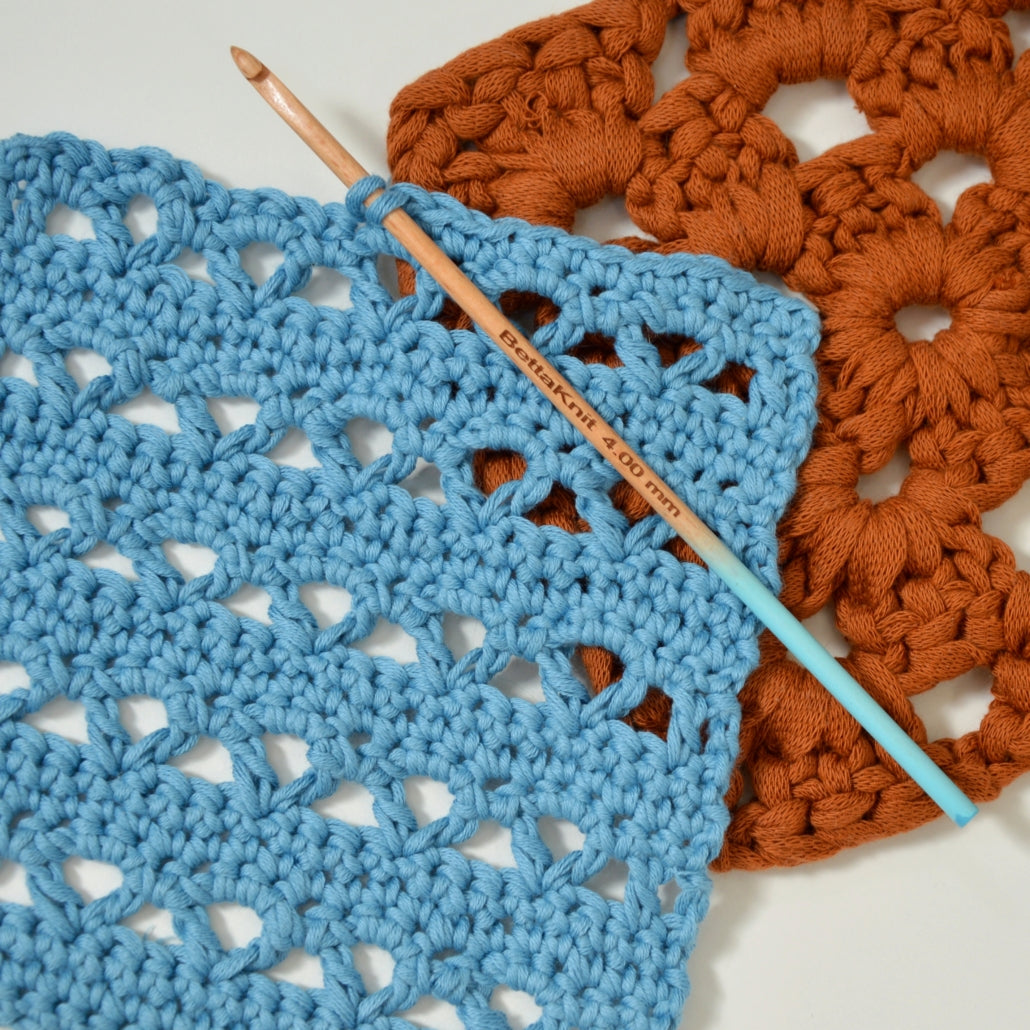
Tunisian crochet requires a specific tool that looks like a cross between a knitting needle and a crochet hook. You need a Tunisian crochet hook, which is longer than a standard hook to accommodate multiple active loops on the shaft.
The length is the most important feature. A standard 6.5-inch hook won't hold enough stitches for a blanket. You need a hook that matches the width of your project. For a typical throw blanket, a 19-inch hook is the standard choice. This length allows you to pick up all the stitches in one pass without crowding.
Look for a hook with a stopper at the end. The stopper prevents stitches from sliding off the back of the hook during the return pass. Without a stopper, your work will unravel before you finish the row. Many Tunisian hooks have a fixed stopper, while others come with a removable rubber or plastic cap.
The shaft should be straight, not tapered like a standard hook. A straight shaft helps maintain consistent tension and prevents stitches from getting stuck. The handle should be comfortable, as you will be holding it for long periods. Ergonomic handles are a good investment if you plan to make large blankets.
Master the Tunisian simple stitch
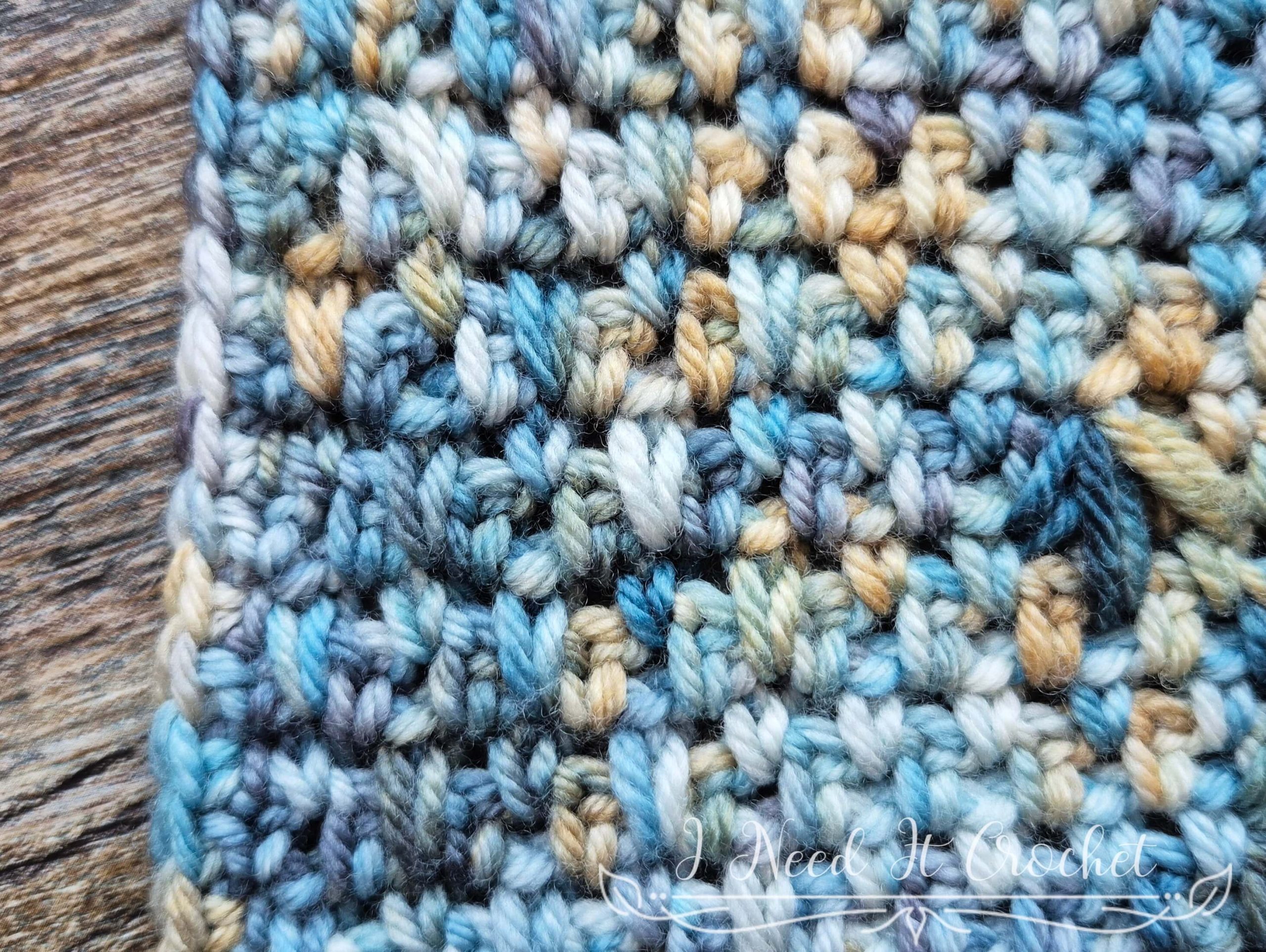
Tunisian crochet differs from standard crochet because you work on two passes rather than one. Standard single crochet finishes the loop as you make it. Tunisian crochet keeps every loop open on the hook until the end of the row. This creates a dense, woven fabric that stands up straight without curling.
You will need a Tunisian crochet hook. These hooks are longer than standard hooks because they must hold all the stitches for the forward pass. The shaft is often straight rather than curved to accommodate the extra length.
The Forward Pass
Hold the hook as you would for standard crochet, but keep the yarn tension slightly looser. Insert the hook under the vertical bar of the first chain from the hook. Yarn over and pull up a loop. You now have two loops on the hook. Repeat this process across the entire row. Do not close any stitches. By the end of the forward pass, you will have one loop for every chain stitch on your hook. This is the longest part of the stitch.
Insert the hook from right to left under the vertical bar of the first chain. Yarn over and pull up a loop. You now have two loops on the hook. Repeat this across the row, picking up one loop per chain.
Continue inserting the hook and pulling up loops until you reach the last chain of the row. You should now have a loop on the hook for every chain stitch you started with. This completes the forward pass.
Turn your work around. Yarn over once. This is the setup for the return pass. You will now pull through loops to close them.
Yarn over and pull through the first two loops on the hook. You still have multiple loops on the hook. Yarn over and pull through the next two loops. Repeat this across the row until only one loop remains on the hook. This completes the Tunisian simple stitch.
The Return Pass
The return pass closes all the loops you picked up. Yarn over and pull through the first two loops on the hook. You will always have one fewer loop on the hook after each pull-through. Yarn over again and pull through the next two loops. Continue this process across the row. At the end of the row, only one loop will remain on the hook. This loop is your starting point for the next forward pass.
Think of the forward pass as gathering all your ingredients and the return pass as cooking them together. Both passes are essential. Skipping either will break the structure of the fabric. Practice this rhythm until the tension feels even. Tight tension makes it hard to insert the hook; loose tension creates holes in your fabric.
Build the blanket in rows
Tunisian crochet works like knitting, but you are still using a hook. The secret to a uniform blanket is keeping your tension steady. If your stitches are too tight, the fabric will curl and become stiff. If they are too loose, the blanket will sag and lose its shape.
Treat each row like a single, continuous motion. You are building a grid of loops, not a series of separate knots. Consistency matters more than speed.
Insert the hook under the vertical bar of the next stitch. Wrap the yarn over the hook and pull up a loop. Leave this loop on your hook. Repeat across the entire row until you have collected one loop from every stitch. This is your forward pass.
Wrap the yarn over the hook and pull through one loop. This is just a chain stitch. For the rest of the return pass, wrap the yarn and pull through two loops. Repeat until only one loop remains on your hook. This secures the stitches and prevents the edge from fraying.
Pause occasionally to measure your work. If your blanket is growing too wide, your tension might be loose. If it feels narrow or stiff, tighten your grip slightly. Small adjustments now prevent major reshaping later.
Fix common Tunisian crochet mistakes
Tunisian crochet has a learning curve. The fabric behaves differently than standard crochet because you hold multiple loops on the hook at once. If your edges curl or your stitches twist, the tension or hook angle is likely off. Fix these issues early to keep your blanket flat and even.
Keep the hook parallel
A twisted stitch happens when the hook isn't parallel to the work. This misalignment forces the yarn to twist around the hook bar, creating a tight, distorted stitch.
Loosen the return pass
Tight edges are the most common complaint for beginners. In Tunisian crochet, the forward pass pulls in a lot of yarn. If you pull too hard on the return pass, the edge becomes rigid and the fabric won't drape.
Treat the return pass lightly. Just pull the yarn through the loops without tension. The goal is to release the tension you built up during the forward pass. If the edge feels stiff, you are likely pulling too hard.
Watch the last stitch
The first and last stitches of a row often cause the fabric to curl. If you skip the full loop on the last stitch, the edge will tighten. Make sure you pull the yarn all the way through the last loop on every return pass. This small detail keeps the edge straight and prevents the blanket from rolling.
Correcting tension
If your fabric feels stiff or hard to work with, your tension is too tight. Tunisian crochet requires a looser grip than standard crochet. Use a hook one or two sizes larger than you would for regular crochet. This extra space allows the fabric to breathe and drape naturally.
Hold your hook parallel to the bottom edge. This prevents twisted stitches and keeps the fabric flat.
Pull the yarn through the loops lightly. Do not tighten the return pass to avoid stiff edges.
Use a larger hook if the fabric feels stiff. This allows the yarn to drape naturally.
Finish and block your blanket
Weaving in ends and blocking are the final steps that turn a rough Tunisian crochet project into a professional-looking blanket. Tunisian stitches create a dense fabric that often curls or skews during work. Blocking relaxes the fibers, allowing the stitches to settle into their proper shape and ensuring the blanket lays flat.
Weave in the loose ends
Use a tapestry needle to thread the loose yarn tails from your starting and stopping points. Weave the needle through the back of the stitches for about two inches, then reverse direction to lock the tail in place. Trim the excess yarn close to the fabric. Repeat this process for any other loose ends left from color changes or accidental drops.
Leave a few inches of tail when you cut the yarn. This gives you enough length to weave the end securely into the back of the work without it pulling out later.
Thread the tail through the eye of a blunt-tipped tapestry needle. The blunt tip prevents you from splitting the existing stitches as you weave, keeping the fabric structure intact.
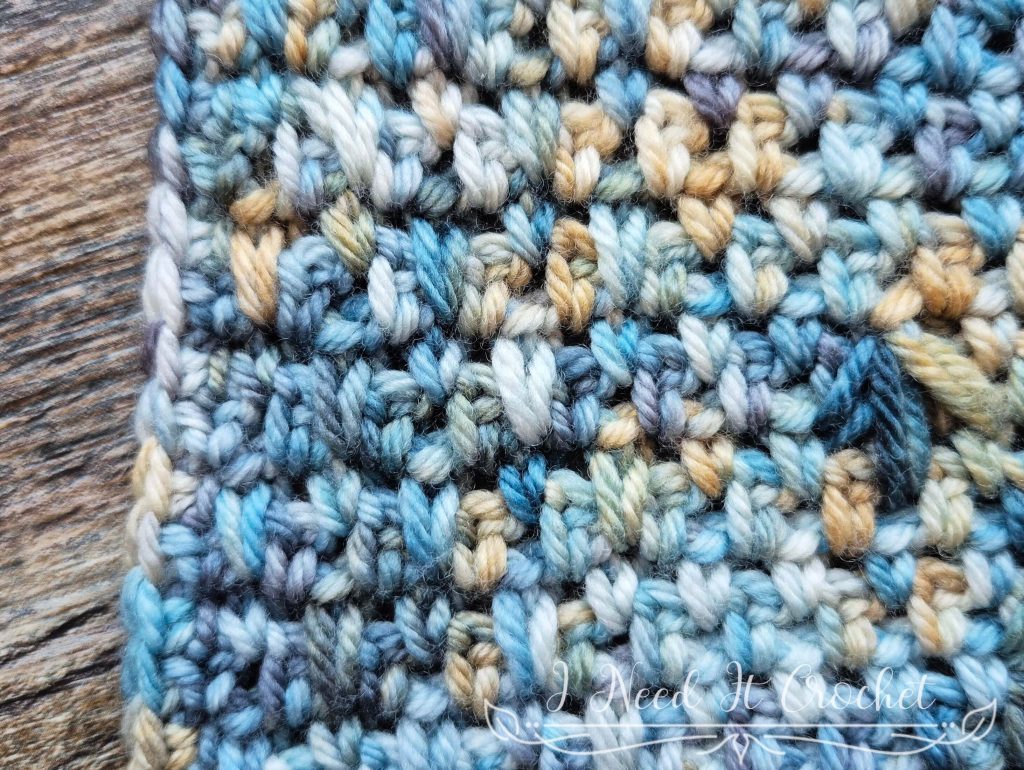
Insert the needle into the back of the stitches, following the path of the yarn. Weave back and forth for about two inches to secure the end. This length ensures the knot won’t come loose over time.
Block the blanket
Blocking is essential for Tunisian crochet because the fabric tends to curl at the edges. Lay your blanket flat on a large surface, such as a carpeted floor or a blocking board. Pin the edges gently with rust-proof T-pins to straighten any curled sides and even out the dimensions.
Lightly mist the blanket with water or use a steam iron held just above the fabric. Do not press the iron directly onto the yarn, especially if you are using acrylic or synthetic blends, as heat can melt or shine the fibers. Let the blanket dry completely before removing the pins. This process relaxes the tension and gives your Tunisian crochet blanket its final, polished shape.
Common questions about Tunisian crochet
Tunisian crochet sits somewhere between knitting and standard crochet. You use a long hook with a stopper to hold multiple loops, creating a dense, sturdy fabric. Beginners often wonder how this affects their workflow compared to traditional methods.
Can you use any yarn weight?
You can use any yarn weight, but worsted (medium weight #4) is the best choice for your first project. It provides enough structure to see your stitches clearly without being too bulky for the long hook. Avoid slippery silk or very thin lace yarns until you master the tension.
Why does my edge curl?
Curling usually means your tension is too tight or you missed a stitch increase. Tunisian fabric naturally wants to curl inward. To fix this, ensure you are picking up all loops on the return pass and consider adding a few increase stitches along the edges.
How do I finish a project?
Finishing is different because you cannot simply cut the yarn and pull it through. You must complete a full Tunisian Simple Stitch row to bind off. This creates a stable edge that won't unravel. Weave in ends on the wrong side to keep the front clean.
No comments yet. Be the first to share your thoughts!