

Gather your summer crochet supplies
Tunisian crochet requires a specific set of tools that differ slightly from standard crochet. The primary difference lies in the hook, which needs to be long enough to hold the active stitches for the row. For summer projects, selecting the right yarn ensures the fabric remains breathable and lightweight.
Choose the right hook
A Tunisian crochet hook features an extension on the handle, turning it into a long needle. This extension allows you to pick up and hold all the stitches on the forward pass before working them off on the return pass. You can use a standard Tunisian hook or a Tunisian adjustable hook, which lets you swap out the tip for different sizes.
Look for hooks made of aluminum or bamboo. Aluminum hooks are smooth and fast, ideal for slippery summer yarns. Bamboo offers more grip, which can help if your yarn is lightweight and prone to sliding. The size of the hook should match the yarn weight; larger hooks create looser, more open fabric, while smaller hooks create a denser weave.
Select summer-weight yarn
For warm-weather projects, choose yarns that breathe. Cotton, linen, and bamboo blends are excellent choices because they wick moisture and stay cool against the skin. Avoid acrylic or wool, which can trap heat and make your project uncomfortable in the summer sun.
A worsted-weight cotton or a light cotton blend works well for beginners. These yarns are easy to see and handle, making it simpler to manage the multiple stitches on your hook. Aim for a skein weight of 4 (medium) or 3 (light) for most Tunisian patterns.
Master the Tunisian simple stitch
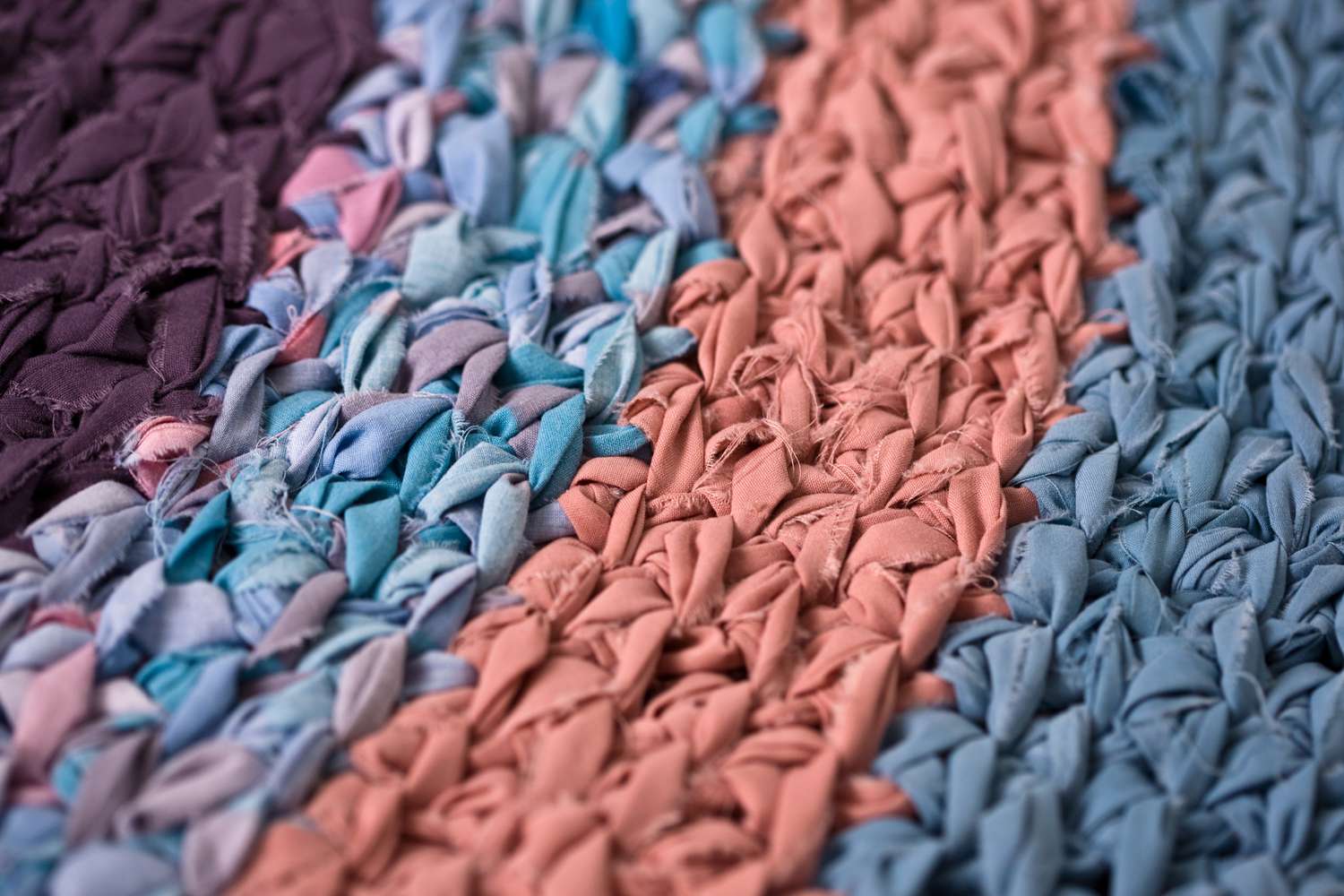
The Tunisian simple stitch (TSS) is the foundation of Tunisian crochet. Unlike standard crochet, it uses a long hook to hold multiple loops at once. This creates a denser, more structured fabric that sits somewhere between knitting and weaving. Learning this stitch is the first step toward making the blanket and dress patterns in this guide.
The process splits into two distinct phases: the forward pass and the return pass. Mastering the rhythm between these two movements is the key to even, consistent tension.
Start with a foundation chain of an odd number of stitches. Tunisian patterns typically require an odd count to ensure the fabric lies flat. Use a hook that is one size larger than you would for standard crochet to keep the chain loose. Tight chains make the forward pass difficult and can distort the final fabric.
Insert the hook under the second vertical bar from the hook (not the foundation chain). Yarn over and pull up a loop. Leave this loop on the hook. Repeat this process across the entire row, inserting the hook under the second vertical bar of each stitch. By the end of the row, you will have a row of loops stacked on your long Tunisian hook. This is the forward pass.
The return pass secures the loops you just picked up. Yarn over and pull through the first loop on the hook (this counts as one stitch). Then, yarn over and pull through the next two loops. Repeat this "yarn over, pull through two" motion until only one loop remains on the hook. This final loop is the anchor for the next row.
For every row after the first, the process repeats exactly as described. Insert the hook under the second vertical bar, pull up a loop (forward pass), then yarn over and pull through two loops until one remains (return pass). Consistency in where you insert the hook—always under the second vertical bar—is what gives Tunisian crochet its signature straight, grid-like edge.
Crochet a lightweight summer blanket
Start with a light, breathable yarn like cotton or a linen blend. These fibers drape well and keep the blanket cool during warm weather. Choose a hook size that matches the yarn label to ensure a loose, airy fabric.
Check your gauge first
Gauge determines the final size of your blanket. Before starting the full project, crochet a small swatch using your chosen stitch pattern. Measure the center of the swatch to avoid edge distortion. If your stitches are too tight, switch to a larger hook. If they are too loose, try a smaller one. Adjusting now saves you from resizing the entire blanket later.
Work the Tunisian simple stitch
The Tunisian simple stitch creates a dense yet flexible fabric perfect for beginners. Begin with a foundation chain, then work the forward pass by picking up loops on your hook. For the return pass, yarn over and pull through two loops at a time until one loop remains. Repeat this sequence across the row. This stitch builds a smooth, reversible texture that looks professional with minimal effort.
Finish with a clean edge
A finished edge gives your blanket structure and prevents curling. Work a row of Tunisian garter stitch or slip stitches along the perimeter. This adds stability and creates a neat border. Once the main body is complete, weave in all loose ends with a yarn needle. Trim any excess yarn close to the fabric.
Block the blanket
Blocking sets the stitches and ensures even dimensions. Lightly steam the blanket or soak it in lukewarm water, then lay it flat to dry. Use rust-proof pins to stretch the edges to your desired measurements. This step smooths out irregularities and gives your lightweight summer blanket a polished, store-bought look.
Construct a fitted Tunisian dress
Shaping a Tunisian dress requires managing the fabric’s natural stiffness and weight. Unlike loose garments, a fitted dress relies on precise increases and decreases to follow your body’s curves. You will work in panels—front, back, and sleeves—then assemble them into a structured silhouette.
The key to success is planning your shaping before you start. Tunisian fabric does not stretch back, so you must calculate your stitch counts carefully. Use a pattern that specifies where to increase or decrease, typically at the sides or underarms.
Plan your panel shaping
Start with the front and back panels. Measure your bust, waist, and hips. Mark these measurements on your pattern chart. You will need to increase stitches to move from the waist to the hips and decrease from the bust to the waist.
For increases, work Tunisian simple stitches into the side stitches. This creates a clean, invisible line. For decreases, use the Tunisian simple decrease (TSSk2tog) to keep the fabric dense and smooth. Avoid bulky decreases that create holes or uneven texture.
Execute the decreases
Decreasing is where many beginners struggle. Tunisian fabric can pull tight if you decrease too aggressively. To avoid this, always work decreases on the forward pass. Draw up loops in the next two stitches, then yarn over and pull through all loops on the hook.
Check your gauge frequently. If your fabric starts to curl or pucker, you are likely decreasing too fast. Slow down and work one decrease every few rows instead of every row. This maintains the drape and prevents the fabric from becoming too stiff.
Assemble the panels
Once all panels are complete, lay them out flat. Pin the side seams and shoulder seams together. Use a Tunisian stitch seam or a mattress stitch for a flat, professional finish. Avoid standard crochet seams that add bulk to the shoulders.
Sew the sleeves into the armholes last. Align the center of the sleeve cap with the shoulder seam. This ensures the sleeve hangs correctly and doesn’t pull at the arm. Finish the neckline and hem with a simple Tunisian crochet border to stabilize the edges.
Check your fit
Before finishing, try on the dress inside out. Check the shoulder seams and armholes. If the dress feels tight, you may need to add a few stitches to the side panels. If it feels loose, you may have decreased too slowly.
Remember, Tunisian fabric can stretch slightly with wear. Aim for a snug but comfortable fit. Once satisfied, weave in all ends and block the dress to set the shape. This final step ensures the dress hangs correctly and maintains its fitted silhouette.
Check your work before finishing
Before you cut the yarn and weave in your ends, take a moment to inspect the piece. Tunisian crochet has a unique memory; stitches can tighten or loosen as you block them later. Catching errors now saves you from unraveling a finished scarf or blanket.
Start by checking your gauge. If the Bella Coco guide recommends a free gauge sheet, use it to compare your swatch against the pattern requirements. Even a small deviation can change the final size significantly. Lay the piece flat and measure a 4-inch square. If it’s too small, your tension is too tight. If it’s too large, loosen up.
Next, look for consistency. Tunisian stitches should look uniform across the row. Check for dropped stitches or accidental yarn overs that created holes. If you spot a mistake, it is much easier to fix it now with a crochet hook than after the project is complete.
Finally, ensure structural integrity. Pull gently on the edges to see if the fabric holds its shape. If the sides curl excessively, you may need to adjust your edge stitches in the next project, but for now, just note it. Once you are satisfied with the quality, you are ready to finish.
Common tunisian crochet: what to check next
Tunisian crochet uses a long hook and different mechanics than standard crochet, which often leads to specific beginner hurdles. Here are the most frequent technical questions regarding tools, stitches, and material choices.
No comments yet. Be the first to share your thoughts!