
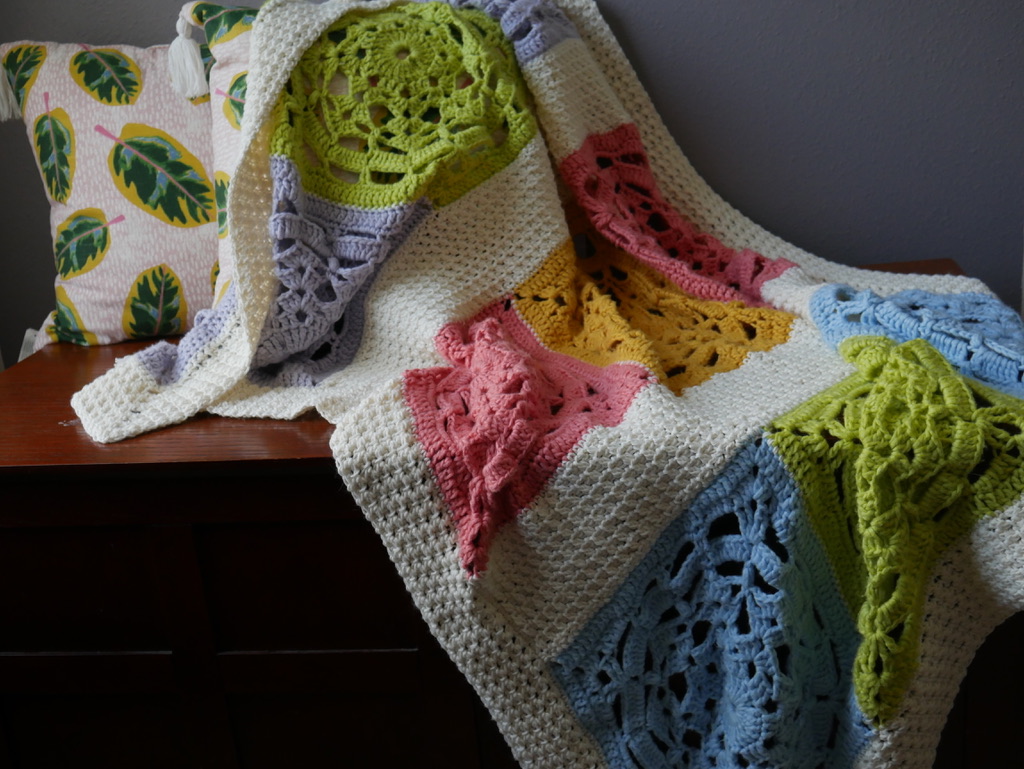

Pick breathable yarn and hook
To make a lightweight blanket that actually cools you down in summer, start with materials that wick moisture and allow air circulation. Heavy acrylics trap heat, turning your blanket into an uncomfortable warm hug. Instead, choose natural fibers like cotton or bamboo.
Choose cotton or bamboo yarn
Cotton is the gold standard for summer crochet. It is breathable, durable, and softens with every wash. Look for 100% cotton in light or sport weight. Bamboo offers a natural drape and a silky, cool feel against the skin.
Avoid acrylic blends for this project. They do not breathe well and can feel clammy in humidity. If you must use a blend, ensure it is mostly natural fiber.
Select an aluminum hook
Pair your yarn with an aluminum crochet hook. Aluminum is smooth and lightweight, allowing yarn to glide without friction. This smoothness helps maintain even tension, critical for creating the open, airy stitch patterns that define a summer blanket.
Plastic hooks can be too grippy, making stitches tight and dense. Wood hooks are beautiful but can snag on cotton fibers. Aluminum strikes the perfect balance between speed and control.
Make a slip knot and foundation chain
Create a secure starting point with a slip knot and foundation chain. Without a stable foundation, the project can unravel or look uneven. The slip knot is the adjustable loop on your hook, and the foundation chain determines the blanket's width.
Step 1: Create the slip knot
A slip knot attaches your yarn to the hook. It should be snug but not tight, allowing the hook to slide through easily.
- Hold the yarn tail (short end) in your non-dominant hand, draping it over your index finger.
- Cross the working yarn (connected to the ball) over the tail to form an "X" shape.
- Insert your hook under the front strand of the "X" and grab the working yarn.
- Pull the working yarn through the loop created by the "X".
- Tighten the knot gently by pulling both the tail and the working yarn. The loop should sit comfortably on the hook.
Step 2: Chain to your desired width
The foundation chain sets the blanket's width. For a lightweight summer throw, a chain of 100–120 stitches is a good starting point, but adjust based on your hook size and yarn weight.
- Hold the hook with the slip knot in your dominant hand.
- Wrap the working yarn over the hook (yarn over) from back to front.
- Pull the yarn through the loop already on the hook.
- Repeat until you have the required number of chains.
Keep tension consistent. Tight chains make the blanket curl and stiff; loose chains look sloppy. Aim for a natural rhythm. This initial chain is the backbone of your summer blanket, so take your time.
Work the double crochet row
The double crochet stitch creates an open, airy fabric that breathes well in hot weather. It moves quickly and produces a drapey texture that feels cool against the skin.
To start, yarn over and insert your hook into the third chain from the hook. Yarn over again and pull up a loop. You now have three loops on your hook. Yarn over and pull through two loops, leaving two loops on the hook. Yarn over one last time and pull through the remaining two loops. This completes one double crochet stitch.
As you continue across the row, maintain consistent tension. Keep loops relaxed but secure. If stitches look uneven, check your yarn over height. Each yarn over should be roughly the same size. This consistency ensures the fabric lies flat and looks professional.
Count your stitches as you go. Most patterns require an even number or a multiple of a specific number plus turning chains. Write down your count after the first row. This number becomes your baseline. If you accidentally add or drop a stitch, fix it immediately.
Practice this rhythm until it feels natural. The motion should be fluid: yarn over, insert, pull up, yarn over, pull through two, yarn over, pull through two. Once you master this sequence, you can crochet the entire blanket efficiently.
Check gauge and fix loose stitches
Gauge measures how many stitches and rows fit into a specific area, usually four inches. If your gauge doesn't match the pattern, your lightweight summer blanket will end up too big or too small. Checking this early saves you from unraveling hours of work later.
Start by crocheting a small swatch using the same hook and yarn you plan for the full blanket. Use the exact stitch pattern specified. Let the swatch rest for a few minutes to let fibers relax, then lay it flat on a hard surface.
Place a ruler across the swatch and count the stitches and rows within a four-inch square. If you have fewer stitches than the pattern calls for, your tension is too loose. If you have more, your tension is too tight. Adjust your hook size accordingly: go up half a size for loose tension, down for tight.
A consistent gauge ensures your blanket dimensions match the pattern exactly. This is especially important for lightweight summer blankets, where drape and size are critical to the final look. For a deeper understanding of how to measure and adjust your gauge, you can refer to a comprehensive guide like the one available from Bella Coco.
Finish edges and weave ends
A clean finish separates a handmade heirloom from a work-in-progress. Binding off secures the final row so the blanket doesn’t unravel, while weaving in loose ends hides the yarn tails for a polished look.
Bind off the final row
Hold the hook in your right hand and the work in your left. Yarn over and pull through two loops on the hook. Repeat this motion across the entire row. Do not pull the yarn tight; keep the tension loose and even to maintain the drape of the lightweight fabric. Cut the yarn, leaving a 6-inch tail. Pull this tail through the last loop to secure it.
Weave in loose ends
Thread the cut tail onto a yarn needle. Weave the needle through the back loops of the stitches along the edge, moving in a zigzag pattern for about two inches. This distributes the tension and prevents the end from popping out later. For the starting tail, follow the same path in the opposite direction. Trim any excess yarn flush with the fabric surface.
Crochet Starter Checklist
Before you start the lightweight blanket, gather your supplies and confirm your gauge. This quick reference keeps the process organized so you can focus on the stitches.
Materials
- Yarn: Choose a lightweight cotton or linen blend. These fibers breathe well and prevent the blanket from feeling heavy in warm weather.
- Hook: Use a 5.0 mm or 5.5 mm hook. The size should match the yarn weight label to ensure proper stitch definition.
- Scissors: Sharp embroidery scissors make it easier to cut yarn cleanly without fraying the ends.
- Tapestry Needle: You will need this large-eyed needle to weave in loose ends and secure the final knot.
- Stitch Markers: Place markers to track the start of each row or to mark pattern repeats.
Prep Steps
- Make a Gauge Swatch: Crochet a small square to check your tension. If your stitches are too tight, the blanket will be stiff; if too loose, it will lack structure. Adjust your hook size if needed.
- Measure Your Space: Ensure your workspace is large enough to lay out the full blanket width. Crochet grows quickly, and a cramped area can lead to uneven edges.
- Plan Your Finish: Decide if you want a simple border or a fringe. Having a plan for the edges helps you estimate the total yarn needed.
Common beginner: what to check next
Starting a lightweight blanket for summer? These practical questions cover the essentials of yarn selection and hook sizing to keep your project manageable and breathable.
What yarn weight is best for a summer blanket?
Choose a light, breathable fiber like cotton, bamboo, or a cotton-acrylic blend. Worsted weight (Category 4) is the standard choice for beginners because it is easy to see your stitches and works up quickly. While bulky yarn feels cozy in winter, it can create a dense, heavy fabric that traps heat. For a true summer drape, a sport or DK weight (Category 2 or 3) offers a lighter, more airy result, though it requires more patience.
What hook size should I use with worsted weight yarn?
A standard H-8 (5mm) hook is the go-to for worsted weight yarn and cotton blends. This size creates a fabric that is sturdy enough to hold its shape but loose enough to breathe. If you prefer a tighter, denser weave, drop down to a G-6 (4mm). If you want a looser, more drapey fabric for a beach cover-up, try a J-10 (6mm). Always check the yarn label for recommended hook sizes, but adjust based on your personal tension.
How many balls of yarn do I need?
A typical 40x50 inch throw blanket made with worsted weight yarn requires approximately 10 to 12 skeins, depending on the stitch pattern. Simple stitches like single crochet use more yarn than open, lacy patterns. To avoid running out mid-project, buy one extra skein from the same dye lot. This ensures color consistency if you need to add more later.
No comments yet. Be the first to share your thoughts!