

Check your hook and yarn
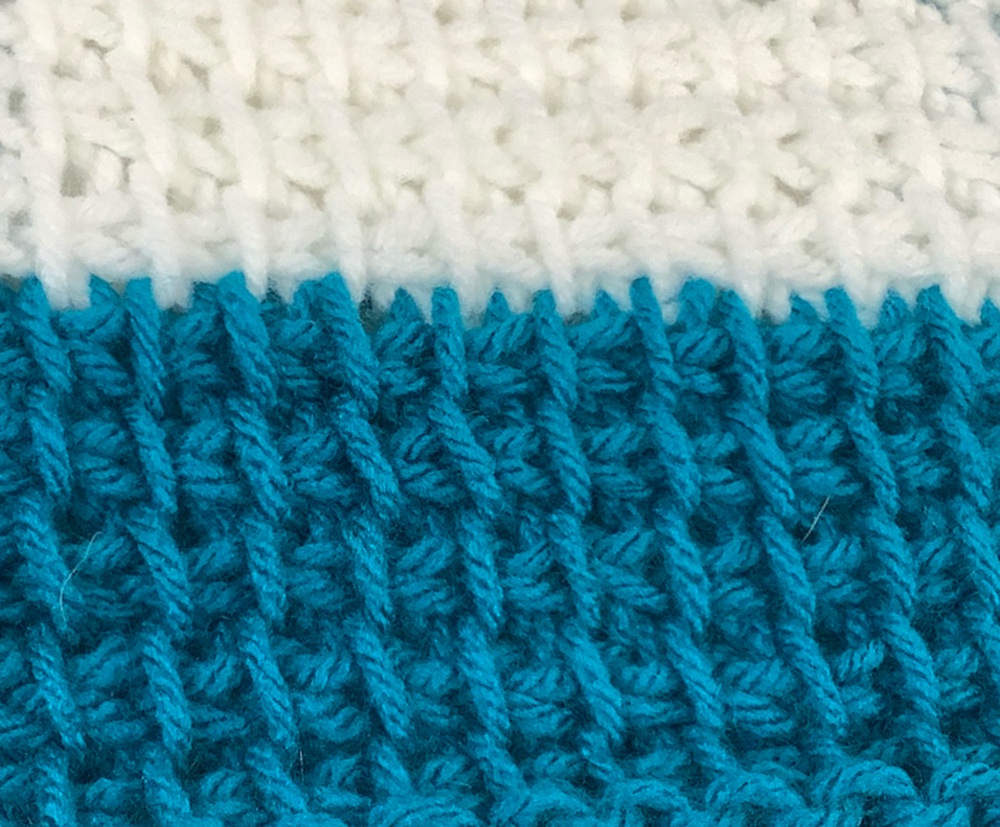
Tunisian crochet uses a long, straight hook with a stopper, which changes how you manage yarn compared to standard crochet. Because you hold multiple loops on the shaft, the yarn must glide smoothly without catching. If your yarn is too fuzzy or the hook is too tight, you will fight the stitch instead of letting it form.
Pick the right hook size
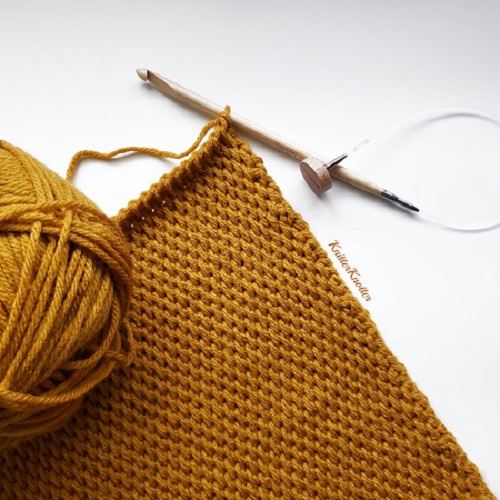
Look for a Tunisian crochet hook with a clear stopper at the end. This prevents stitches from slipping off while you carry the work back across. Standard crochet hooks lack this stopper, making Tunisian crochet difficult or impossible to complete. Choose a hook size that matches your yarn weight, but be prepared to go down half a size if the fabric feels too loose. Tunisian fabric naturally drapes heavier than regular crochet.
Choose smooth, lightweight yarn
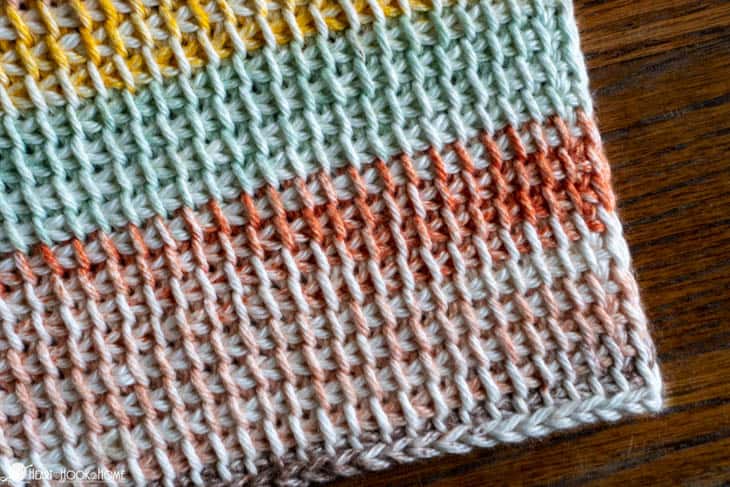
The reversible Tunisian stitch creates a dense fabric that can become stiff if you use heavy wool. For summer dresses, opt for smooth cotton, linen, or bamboo blends. These fibers allow the long hook to slide easily through the loops, reducing hand fatigue. Avoid novelty yarns with knots or heavy textures; they will hide the reversible detail you are trying to showcase.
Test your tension
Before starting your dress, make a small swatch using the reversible Tunisian stitch. Measure the gauge against the pattern requirements. Tunisian crochet tends to pull in tighter than regular crochet, so you may need a larger hook than usual. A loose swatch will result in a dress that fits too loosely, while a tight swatch will make the fabric stiff and uncomfortable in the heat.
Work the stitches in order
The reversible Tunisian stitch works like a zipper: the forward pass locks loops onto the hook, and the return pass releases them to create a dense, double-sided fabric. To execute this cleanly, you must move through the steps without skipping or rushing the tension. This sequence ensures the fabric remains flat and the edges stay clean for your summer dress.
-
All loops loaded evenly on hook
-
Edge chain secured
-
Return pass completed with one loop remaining
-
Fabric lies flat without curling
Mistakes That Warp the Shape
Even with perfect tension, the reversible Tunisian stitch can twist or curl if you skip a few critical checks. The fabric is heavier than standard crochet because you are holding loops on the hook for a full row. This weight demands specific handling to keep your summer dress laying flat.
Ignoring the Foundation Chain Count
Tunisian crochet requires an odd number of stitches for the standard Tunisian Simple Stitch (TSS) unless you are using a specific variation. If your chain is even, your first return pass will end with a single loop on the hook instead of two, breaking the rhythm and causing a jagged edge. Count your chain twice before you start.
Pulling Too Tight on the Forward Pass
The forward pass picks up loops that will sit on the hook for the entire return pass. If you pull these loops tight against the hook, the return pass becomes a struggle. The resulting fabric will be stiff, dense, and prone to curling at the edges. Aim for a relaxed, open stitch that allows the hook to glide easily.
Skipping the Tension Check
Tunisian fabric shrinks vertically after washing. If you do not block your swatch before starting the garment, the final piece may end up shorter than planned. Always wash and block a swatch using the same method you plan for the finished dress to gauge the true dimensions.
Advanced Tunisian Crochet: What to Check Next
Before committing to a reversible Tunisian dress, it helps to understand where this technique sits in the broader craft. Tunisian crochet uses a long hook to hold multiple loops, creating a fabric that feels dense and structured—perfect for summer garments that need to drape without clinging.
Is Tunisian crochet harder than regular crochet?
It is distinct, not necessarily harder. The learning curve focuses on managing the long row of active loops on your hook. Once you master the return pass, the rhythm becomes intuitive. Many crocheters find the resulting fabric faster to work up than traditional stitches because you cover more ground per row.
What is so special about Tunisian crochet?
The reversible nature of the Tunisian Simple Stitch makes it ideal for garments with no wrong side. This eliminates the need for finishing seams or hiding ends, streamlining the construction of your summer dress. The fabric is also less stretchy than standard crochet, offering a flattering, stable silhouette.
What is advanced crochet?
Advanced crochet moves beyond basic stitches into complex texture and colorwork. This includes mosaic patterns, intricate lace, and intricate stitch combinations like bobbles or puff stitches. Mastering these requires consistent tension and the ability to read complex charts, elevating the project from simple utility to intricate art.
What is the hardest crochet stitch in the world?
Difficulty is subjective, but the Tunisian Knit Stitch is often cited as challenging due to its specific hook manipulation. It requires inserting the hook under both vertical bars of the previous row, which can be tricky to see. However, with practice, it produces a smooth, knit-like texture that is highly rewarding.
No comments yet. Be the first to share your thoughts!