

Crochet's AI Revolution: A First Look
Crochet is experiencing a quiet revolution, driven by advancements in artificial intelligence. For generations, crocheters have relied on patterns created by designers, shared in books, and increasingly, found online. Now, AI is stepping into the picture, not to replace the human element, but to amplify it. This isn’t about robots crocheting blankets; it’s about using AI to help you design, modify, and even create entirely new crochet patterns.
The shift is happening now because of two key developments: improvements in image recognition and the rise of generative AI. Image recognition allows computers to 'see' and interpret stitch patterns, while generative AI enables them to create novel designs based on given prompts. This combination unlocks possibilities that were simply science fiction a few years ago.
Currently, You Get Hooked offers a wide range of crochet patterns, from beginner-friendly granny squares to more advanced techniques and home decor projects. But imagine a future where that library expands exponentially, with patterns tailored to your exact preferences, generated on demand. That’s the promise of AI-assisted crochet design. We're moving toward a more personalized and accessible crochet experience.
It’s important to remember that this is still early days. We aren’t talking about fully automated pattern creation yet. However, the tools are evolving rapidly, and the potential for creativity is enormous. The goal is to empower crocheters, not to diminish the artistry and skill involved in the craft.
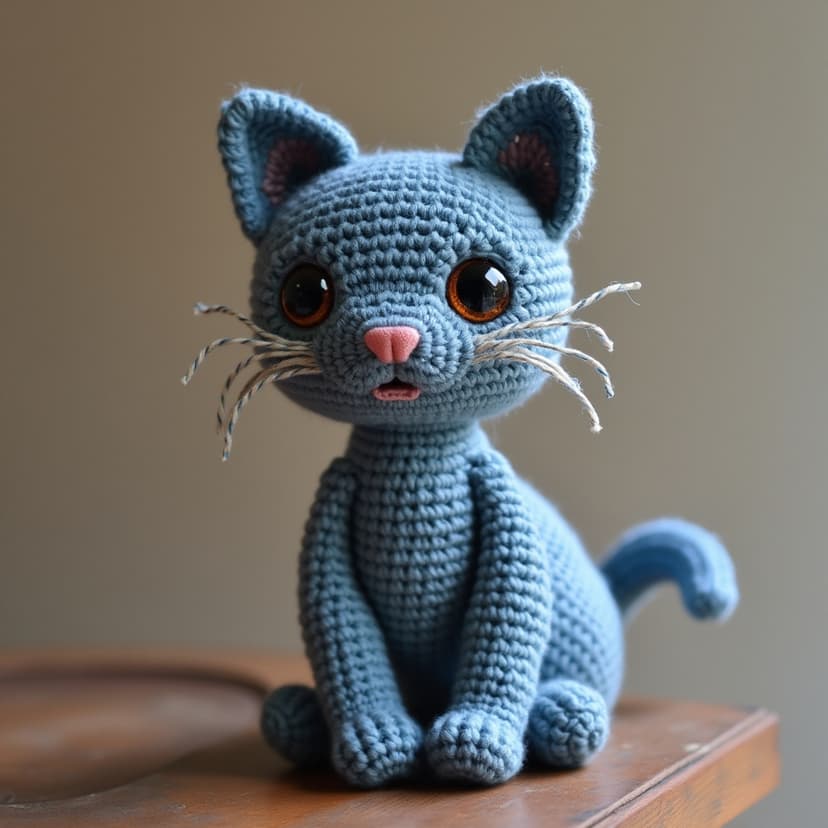
Decoding Crochet: What AI 'Sees'
At its heart, AI pattern recognition relies on teaching a computer to interpret visual information the way a crocheter does. This means the AI needs to be able to 'read' stitch diagrams, understand color changes, and recognize repeating elements within a pattern. It's not about understanding the craft of crochet, but about identifying visual patterns and relationships.
The process involves feeding the AI massive datasets of crochet patterns – stitch diagrams, charts, and even photographs of finished projects. The AI then learns to identify the fundamental building blocks of crochet: single crochet, double crochet, treble crochet, and so on. It learns to associate these stitches with their corresponding symbols and abbreviations. This is similar to how image recognition software learns to identify cats or dogs.
However, there are significant challenges. Crochet patterns aren’t always standardized. Diagrams can be inconsistent, handwritten notes are common, and terminology can vary across designers and regions. An AI trained on one set of patterns might struggle to interpret a pattern created using a different style or notation. The quality of the training data is absolutely critical.
The role of image datasets is paramount. A larger, more diverse, and accurately labeled dataset will result in a more robust and reliable AI model. Researchers are actively working on creating these datasets, often relying on contributions from the crochet community. The more patterns available, the better the AI can learn and adapt.
Current Tools: AI Helpers for Crocheters
The year 2026 brings a surprising number of AI-powered tools designed to assist crocheters, though full automation remains elusive. These tools generally fall into three categories: pattern generation assistance, pattern modification tools, and pattern analysis aids. It’s important to be realistic; these aren’t 'push-button' solutions, but they can significantly speed up the design process and offer new creative avenues.
Several web-based platforms, like StitchAI and PatternForge, allow you to input parameters such as stitch type, desired size, and color scheme, and then generate a basic crochet pattern. These patterns often require refinement and testing, but they can serve as a starting point for more complex designs. Some platforms are also experimenting with generating stitch diagrams directly from text descriptions.
Browser extensions, such as ChartReader, can help decipher complex stitch diagrams by highlighting individual stitches and providing definitions. These extensions are particularly useful for patterns that use unfamiliar or ambiguous notation. They also help with converting between different chart formats.
Mobile apps, while less common, are emerging. Knit & Crochet AI, for example, allows you to upload a photo of a crochet motif and receive suggestions for similar patterns or stitch combinations. These apps are still in their early stages of development, but they show promise. The limitations currently are in the accuracy of the pattern generation and the need for significant user input to refine the results.
- StitchAI: Generates basic crochet patterns based on user parameters.
- PatternForge: Similar to StitchAI, focuses on pattern creation.
- ChartReader: Browser extension for deciphering stitch diagrams.
- Knit & Crochet AI: Mobile app for pattern suggestions based on image uploads.
AI Crochet Tool Comparison - 2026
| Tool Name | Primary Function | Input Method | Output Format | Cost |
|---|---|---|---|---|
| StitchAI | Pattern Generation & Modification | Text Description, Image Upload | Written Instructions, Chart | Paid |
| KnotBot | Stitch Identification & Pattern Suggestion | Image Upload | Pattern Suggestions, Stitch Dictionary Lookup | Free/Paid Options |
| YarnCraft Assist | Error Correction & Gauge Calculation | Text Input (Pattern Text) | Revised Pattern Text, Gauge Recommendations | Free |
| HookHelper | Pattern Generation (Simple Shapes) | Basic Shape Selection & Size Input | Basic Chart | Free |
| FiberForge | Complex Pattern Generation & Customization | Detailed Text Description, Style Preferences | Chart, Detailed Written Instructions | Paid |
| PatternWeave | Pattern Adaptation (Size/Yarn Weight) | Existing Pattern Upload, New Size/Yarn Input | Modified Pattern (Written) | Paid |
| CrochetVision | Stitch Recognition & Pattern Recreation | Image Upload | Approximate Pattern (Requires Refinement) | Free/Paid |
Qualitative comparison based on the article research brief. Confirm current product details in the official docs before making implementation choices.
From Idea to Stitch: Generating New Patterns
The most exciting potential of AI in crochet lies in its ability to generate entirely new patterns. Imagine transforming a simple idea into a tangible design with minimal effort. Currently, this is achieved through various input methods, each with its own strengths and weaknesses. Text descriptions are the most common, allowing you to specify the desired aesthetic and features of the pattern.
For example, you could input “a floral blanket with a vintage feel, using pastel colors and incorporating granny squares.” The AI would then generate a pattern that attempts to meet these criteria. However, the results can be unpredictable. The AI might misinterpret the desired aesthetic or create a pattern that is structurally unsound. Precise wording is key, and even then, iteration is usually necessary.
Image uploads offer another avenue for pattern generation. You could upload a photograph of a painting, a flower, or any other visual inspiration and ask the AI to create a crochet version. This approach is particularly effective for translating complex visual patterns into stitch arrangements. The AI analyzes the image, identifies key shapes and colors, and then generates a corresponding crochet pattern.
Sketching is a more direct input method, allowing you to draw your own design and have the AI translate it into a crochet pattern. This requires more skill and effort, but it offers greater control over the final result. Controlling parameters like stitch complexity, color palettes, and finished size is also possible, but often requires a deep understanding of the underlying AI algorithms.
The current limitations are significant. AI struggles with generating patterns for complex garments that require precise shaping and fit. It also tends to produce patterns that are repetitive or lack originality. Ensuring structural integrity – that the pattern will actually hold its shape when crocheted – remains a major challenge. However, these limitations are being addressed through ongoing research and development.
Pattern Modification: Tweaking Existing Designs
Many crocheters don’t want a brand-new pattern; they want to adapt an existing one to better suit their needs. AI excels at this type of modification. Resizing a pattern is perhaps the easiest task. Simply input the desired dimensions, and the AI will automatically adjust the stitch counts and row/round numbers to achieve the new size. This is incredibly useful for creating projects in different sizes without having to recalculate everything manually.
Changing a stitch is another common request. For example, you could ask the AI to replace all single crochet stitches with double crochet stitches, or to substitute a complex stitch pattern with a simpler one. The AI will analyze the pattern and make the necessary adjustments, ensuring that the overall design remains consistent. Adapting a pattern for different yarn weights is also straightforward.
Simplifying a complex design is particularly valuable for beginners. The AI can identify intricate stitch patterns and suggest simpler alternatives that achieve a similar visual effect. This makes challenging patterns more accessible to crocheters with less experience. Here’s a step-by-step guide to modifying a pattern with AI:
Step 1: Upload the pattern to a platform like ModStitch. Step 2: Specify the desired modification (e.g., resize, change stitch, simplify pattern). Step 3: Review the AI-generated modifications and make any necessary adjustments. Step 4: Download the modified pattern and start crocheting!
AI's ability to handle modifications is currently stronger than its ability to generate completely original patterns. Modifications that involve simple changes to stitch counts or yarn weights are generally handled with ease, while more complex modifications – such as altering the overall shape of a garment – can be more challenging.
Beyond the Pattern: AI and Crochet Tools
The impact of AI extends beyond pattern design itself. It can enhance various aspects of the crochet process, from yarn selection to error detection. Yarn recommendation based on pattern requirements is a growing area. AI can analyze a pattern and suggest suitable yarn types, weights, and colors, taking into account factors like stitch gauge and desired drape.
Automatic calculation of yarn quantities is another valuable application. Input the pattern and your chosen yarn, and the AI will estimate how much yarn you’ll need, reducing waste and saving you money. This is particularly useful for complex projects with multiple colors and stitch patterns. Error detection in crocheted fabric is a more ambitious goal, but it’s becoming increasingly feasible.
Using image analysis, AI can identify mistakes in your work, such as incorrect stitch counts or uneven tension. This could involve uploading a photo of your project or using a camera-equipped device to scan the fabric. Personalized stitch tutorials are also on the horizon. AI can analyze your crocheting technique and provide tailored feedback and guidance.
This ties directly back to the tools and kits available on You Get Hooked. Imagine an AI-powered shopping assistant that recommends the perfect crochet hook, yarn, and accessories based on your project and skill level. This would create a more seamless and personalized shopping experience, helping crocheters find exactly what they need with ease.
The Future of Crochet Design: Trends in 2026
Looking ahead to 2026, several trends are likely to shape the future of crochet design. We’ll likely see the emergence of AI-powered crochet pattern marketplaces, where designers can sell their AI-generated or AI-assisted patterns. These marketplaces could offer a wider variety of patterns than ever before, catering to niche interests and individual preferences.
AI will become increasingly capable of designing patterns for complex garments with perfect fit. This will require advancements in 3D modeling and body scanning technology, but it’s a realistic goal. AI will also help bridge the gap between crochet and other crafts like knitting or weaving, allowing designers to seamlessly translate patterns between different mediums.
However, these advancements raise ethical considerations. Copyright and attribution are key concerns. Who owns the copyright to a pattern generated by AI? How do we ensure that designers are properly credited for their work? The potential impact on crochet designers is also a topic of debate. Will AI displace designers, or will it simply augment their abilities?
I believe that AI will ultimately empower designers, allowing them to focus on the creative aspects of pattern development while automating the more tedious tasks. More likely, we'll see more integration with augmented reality – visualizing patterns directly onto your project using a smartphone or tablet. This would allow you to preview the finished product before you even start crocheting.
How comfortable are you using AI to help with your crochet projects?
AI tools are increasingly being used to assist with crochet pattern design, from generating stitch charts to customizing sizing. Whether you are a beginner learning how to crochet a blanket or an experienced crafter designing complex patterns, we want to know where you stand. Vote below and share your thoughts in the comments!
Resources for AI-Assisted Crochet
Ready to explore the world of AI-assisted crochet? Here are some resources to get you started. You Get Hooked remains your ultimate guide, with a comprehensive beginner's guide, stitch guide, and a vast library of crochet patterns. Check out our advanced techniques section for inspiration and tutorials.
For more information on AI in crafting, explore websites like CraftAI and PatternGen. Online communities like Ravelry and Crochet Circle offer forums and discussions on AI-assisted crochet. Experiment with the tools mentioned earlier: StitchAI, PatternForge, ChartReader, and Knit & Crochet AI.
Here are some frequently asked questions:
Q: Will AI replace crochet designers? A: Unlikely. AI is more likely to augment their abilities and automate tedious tasks.
Q: Is it ethical to use AI-generated patterns? A: That depends on the specific tool and its licensing terms. Always respect copyright and give credit where it’s due.
Q: How accurate are AI-generated patterns? A: Accuracy varies. Always review and test the pattern before starting your project.
No comments yet. Be the first to share your thoughts!